SEARCH
Enter keywords, product name, or question
Safety First: Remove the battery or unplug the tool before changing the blade
Important: Always wear protective gloves before any maintenance.
1. Choose the Right Blade
Reciprocating saws can cut wood, metal, plastic, and plasterboard, but you must use the correct blade for the material:
○ Wood blades: Coarse teeth for fast cuts.
○ Metal blades: Fine teeth for cutting pipes or sheet metal.- Check the blade packaging for material compatibility and maximum cutting capacity.
2. Fit the Blade
Use the tool-less blade change system:
○ Rotate the blade clamp to unlock.
○ Insert the blade shank fully into the clamp.
○ Release the clamp to lock the blade securely.- Ensure the blade is firmly seated before use.
3. Prepare the Workpiece
- Secure the material using clamps or a stable surface.
- Avoid holding the workpiece by hand, as this can cause instability and kickback.
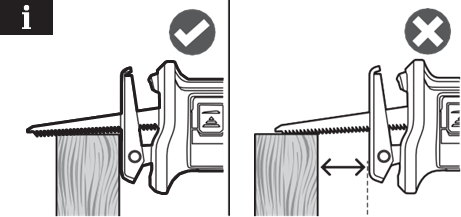
4. Position the Saw Shoe
- Before starting the cut, ensure the saw shoe is in firm contact with the material or as close as possible.
- This provides stability, reduces vibration, and improves cutting accuracy.
5. Cutting Technique
- Hold the saw with both hands on the insulated gripping surfaces.
- Start the saw before contacting the material, then gently guide the blade into the cut.
- Do not force the saw—let the blade do the work.
- For plunge cuts, tilt the saw and ease the blade into the material slowly.
RRS18C, RRS18X, RRS1801, R18RS-0, RRS18, RCRS18, RRS18X1